EDIT June 6, 2021: Lemonde.fr has made some additional corrections:
- (+) Lemonde.fr still triggers AT Internet trackers as soon as you arrive on its website. But AT Internet, provided it is configured properly and used only for what is strictly necessary to the website's operation and day-to-day administration, falls within the scope of the consent exemption defined by the CNIL.
- (+) When you refuse to give your consent, Lemonde.fr blocks the loading of the Dailymotion video player, preventing it from leaking your personal data.
- (-) The blogging platform has unfortunately still been overlooked: it leaks your personal data to Google Analytics before consent.
- (+) Leaving aside AT Internet (consent exemption), Batch (notifications) and Google Firebase (technical), the iOS app does not track you at launch, nor when you refuse to give your consent.
EDIT September 20, 2020: Via Twitter (here and there), I was informed that Lemonde.fr had made corrections. After checks:
- (-) Lemonde.fr still leaks your personal data to AT Internet as soon as you arrive on its website.
- (-) Lemonde.fr still does not offer an opt-out for AT Internet.
- (-) Lemonde.fr still leaks your login data to AT Internet.
- (+) Your scroll no longer constitutes consent.
- (+) If you refuse to be monitored, Lemonde.fr now respects your choice and does not increase the number of trackers. In particular, legitimate interest is no longer pre-checked when you have refused to give your consent.
- (-) But Lemonde.fr has unfortunately overlooked its Dailymotion player, embedded right on the home page. It does not respect your choices and leaks your personal data to various companies (and shows a curious timer: you have 10 seconds to react).
- (-) Lemonde.fr has also overlooked its blogging platform, whose articles are often featured on its home page. Take this article, featured on September 20: you may have refused trackers, but your personal data still feeds multiple marketing companies.
- (-) Nothing changes on the iOS app: Lemonde.fr tracks you from the first launch and if you refuse tracking, monitoring continues.
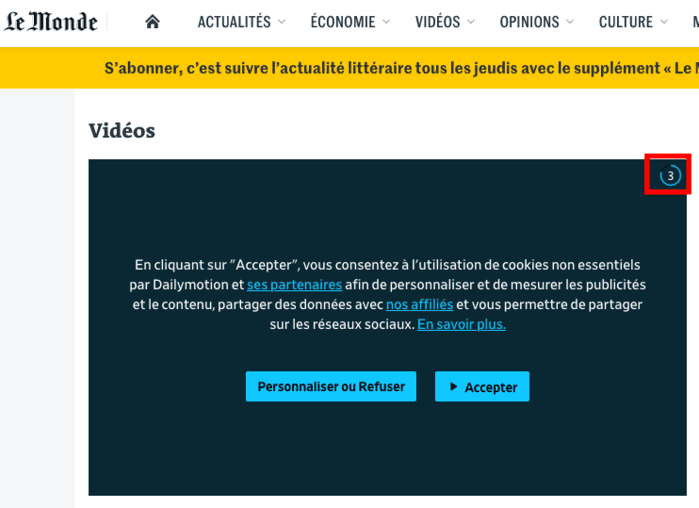 You have already refused advertising tracking, but it is not over: you have 10 seconds to refuse the tracking started by the Dailymotion video player. In fact, even if you go to the trouble of clicking Customize and "Refuse all" on Dailymotion's "Your privacy settings" page, tracking continues.
EDIT September 2, 2020: I was able to complete the legal information (and correct typos) thanks to the explanations of @Cellular_PP, thank you!
Lemonde.fr leaks your personal data to AT Internet as soon as you arrive on its website
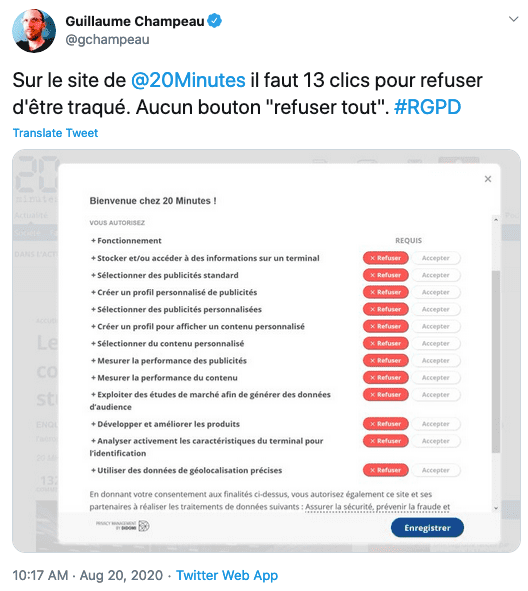
Since August 15, Google has integrated the advertising industry's new consent-collection “framework”, the aptly named "Transparency and Consent Framework (TCF) v2.0", and publishers are updating their consent banners. An improvement in the user experience? Not necessarily, going by my French Twitter feed:
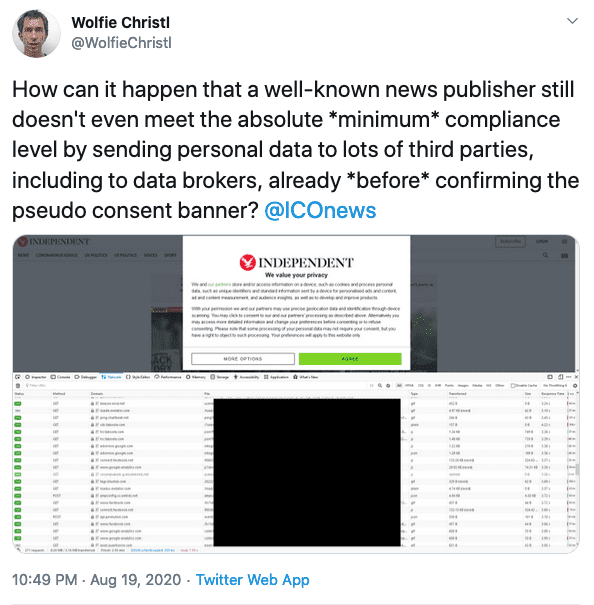
In the UK, it is no better:
To better understand what has changed among media sites, I chose to test Lemonde.fr, the French newspaper of record, which I read occasionally. To be honest, my expectations were not especially high:
- Lefigaro.fr, its historic rival, extensively tracks its readers, cf. "Le Figaro, emblem of invasive advertising tracking on French media sites".
- Before their new versions, these consent banners were already misleading Internet users, see "Collecting consent on the internet: a widespread lie".
- Last December, Lemonde.fr was already leaking your personal data to numerous third parties including Russian companies, see "Weborama and Lemonde.fr, site slowness and leak of your personal data to Russia".
But you have the right to demand better respect for your privacy. To see the tracking on Lemonde.fr, follow these steps:
- Disable your ad blocker.
- Delete cookies on Chrome (Settings > Advanced settings > Clear browsing data), so you are logged out of your Google account.
- Open the Chrome console (⌘+Option+J on Mac, Ctrl, Shift and J on PC), “Network” tab or launch Charles Proxy.
- Then go to the home page Lemonde.fr.

First observation: Le Monde does not let you refuse tracking directly, only “Configure cookies”. This choice runs counter to the spirit of the GDPR, even if the CNIL is well behind in enforcing it. Take, for example, this interview with the head of the CNIL in the newspaper... Le Monde, in February 2020:
This means that the Internet user will no longer have a big green button offering to “Accept” and a small text in a corner to refuse?
There must be symmetry between the two. Furthermore, users must be able to know who receives their data when it is collected for advertising profiling. There are laws in force that require obtaining free and informed consent, but on the whole these recommendations are not implemented.
Reminder: the GDPR came into force in May 2016 and has been applicable since May 25, 2018 (cf. article 99 of the GDPR). Businesses have therefore had four years to prepare, so the CNIL should not be putting off the law's applicability at the expense of people's fundamental rights.
But perhaps Le Monde is waiting for the CNIL's new recommendations (or even its sanctions?!) before acting... Let's now look at the requests sent:
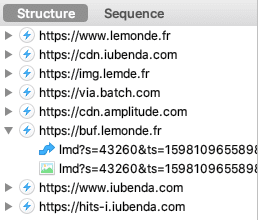
Three takeaways:
- Lemonde.fr calls two marketing companies to download their javascript files, Batch and Amplitude; no tracking hits here.
- Iubenda is the CMP (Consent Management Platform) used by Le Monde.
- After checking, the subdomain buf.lemonde.fr turns out to be a tracking proxy for the French analytics company AT Internet; Le Monde allows it to track you even before you have given your consent.
Lemonde.fr does not offer an opt-out for AT Internet, in violation of the law
What can Lemonde.fr rely on to leak your personal data to AT Internet even before receiving your consent? Perhaps an old CNIL exemption that is hardly consistent with the spirit of the GDPR.
Except that this exemption originated in Article 6 of the CNIL's 2013 deliberation; the conditions for placing cookies without consent are now specified in Article 5 of the CNIL's July 2019 deliberation. The fact that the CNIL leaves the article online could lead a site publisher to argue that the CNIL misled it and that, consequently, it acted in good faith by not applying the 2019 deliberation. The CNIL should therefore modify its article.
But whether we look at the 2013 or 2019 deliberation, one rule remains mandatory: implementing the "opt-out" option: "it must have the ability to object via an opposition mechanism that can be easily used across all terminals, operating systems, applications and web browsers. No reading or writing operation must take place on the terminal from which the person objected".
So let's click on "Configure cookies":
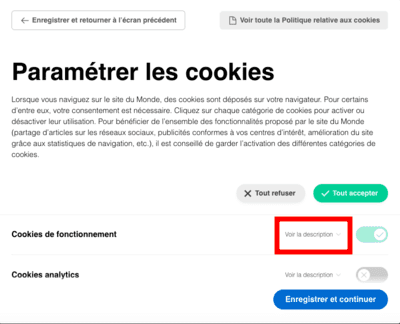
Curious to know what is hidden behind these “Operational Cookies”?
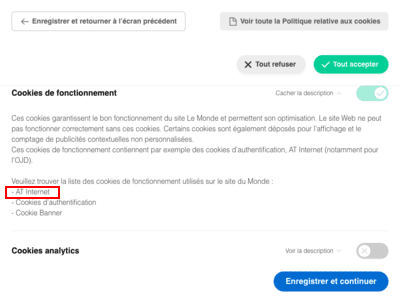
Surprise! Alongside authentication cookies, Lemonde.fr places AT Internet trackers in the “Operational Cookies” category (and not “Analytical Cookies” as one might expect). The excuse given? The OJD, now named ACPM, a media audience certification body that lets Le Monde regularly boast about its strong audience figures.
As a result of this classification of AT Internet in "Operational Cookies", the "opt-out" option has not been implemented, in violation of the conditions of the exemption.
Another rule that must be respected in order to benefit from the exemption is information, which must be provided before the cookie is placed: "the person must be informed prior to their implementation" (the 2013 deliberation only indicated that the person had to be informed). Here again, Lemonde.fr violates the conditions of the consent exemption.
Through a security flaw, Lemonde.fr leaks your login data to AT Internet
Let's continue the investigation into these calls to AT Internet. Behind the subdomain buf.lemonde.fr hides an obscure domain:

A domain that actually belongs to AT Internet:
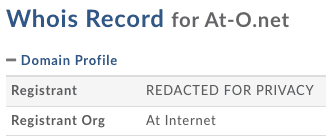
This camouflage is achieved through a mechanism called domain delegation, or CNAME. Lemonde.fr lets AT Internet manage a subdomain on its behalf, via an alias mechanism. The appeal for marketing companies is that it gets around browser protections (such as Safari ITP or Firefox Enhanced Tracking Protection) and ad blockers (although some ad blockers, such as uBlock Origin on Firefox, do manage to block these trackers).
The use of CNAME is dangerous; it can leak your login data: cookies from the visited domain (such as authentication cookies from lemonde.fr) can be sent to the tracker subdomain (like buf.lemonde.fr). So let's look at the requests sent to AT Internet when I am logged in to Lemonde.fr:
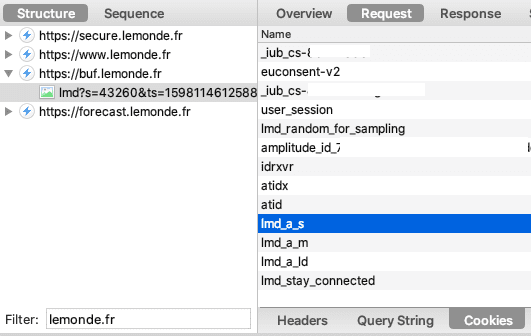
AT Internet does indeed pick up all the cookies from the lemonde.fr domain. To check whether these cookies give access to my Lemonde.fr account, I delete my cookies, then use the Chrome extension Edit This Cookie to enter the various cookies collected by AT Internet. I quickly realize that the “lmd_a_s” cookie is enough to log into my account:
Magic! An AT Internet employee can thus access your account
I have already had the opportunity to talk about this security flaw in previous articles:
- Criteo is an accessory to the crime, pushing many publishers to implement it, see "Criteo, a French surveillance marketing giant".
- On a media site, you might tell yourself it's not that serious, but this flaw is sometimes implemented on more sensitive websites such as the Boursorama Banque customer portal (since fixed), see "Boursorama Banque leaks your login data".
Refuse to be tracked, and Lemonde.fr multiplies the trackers, particularly through Weborama
Let's continue our journey on the Lemonde.fr consent banner:
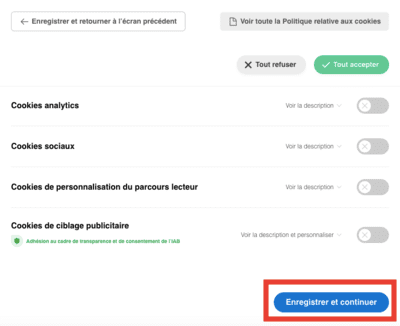
Apart from operational cookies, everything is unchecked by default, and Lemonde.fr also offers a “Refuse all” button. Good practice so far; now let's click "Save and continue". Do you now expect to no longer be tracked?
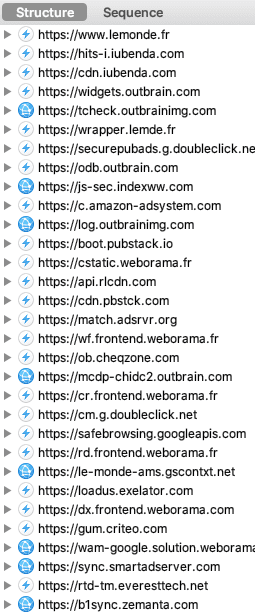
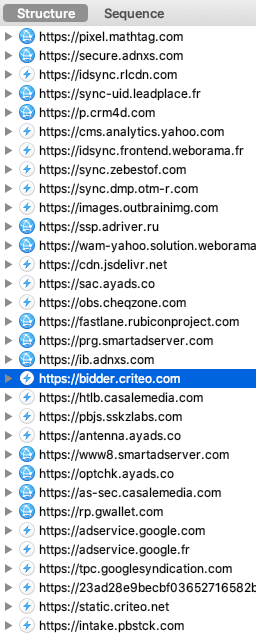
No, you are not dreaming: these are all the requests sent after making the effort to refuse tracking. And this happens without reading a single article or even reloading the page. In detail, here are the trackers that place cookies via HTTP headers (some trackers also create cookies via javascript, or store identifiers in the browser's local storage), with a personal identifier (pseudonym):
- Outbrain: those trashy clickbait articles at the bottom of the page also track you across the web, and on Lemonde.fr without your consent.
- Weborama: French “data marketing” company working with Lemonde.fr, profiles you on the web and, as you can read below, leaks your personal data to many other third parties.
- Index Exchange: via casalemedia.com, an advertising monetization platform (SSP) used by Lemonde.fr through a system called "Header Bidding" (competition for advertising inventory across several marketplaces).
- TheTradeDesk: via adsrvr.org, an advertising inventory buying platform, called by Index Exchange and Weborama.
- Criteo: French world leader in retargeting, which tracks you aggressively on the web and in apps. Lemonde.fr has installed its "Direct bidder" (allowing Criteo to buy without paying commission to a monetization platform); Criteo is also called by Weborama.
- Nielsen: via exelator.com, the eXelate company acquired by market research giant Nielsen in 2017 is also called by Weborama.
- Smart AdServer: French advertising monetization platform used by Lemonde.fr via "Header Bidding", also called by Weborama.
- Adobe: via everesttech.net, the American giant also offers a marketing suite; it is also called by Weborama.
- MediaMath: via mathtag.com, advertising inventory buying platform, called by Weborama.
- Temelio: via leadplace.fr, a French data marketing company, offers advertisers the ability to cross-reference your personal data online and offline, again via Weborama.
- Graphinium: via crm4d.com, a French company specializing in the reconciliation of online and offline personal data, again via Weborama.
- Yahoo: yes, Yahoo still exists, resurrected by Weborama.
- ZBO Media: via zebestof.com, French advertising inventory buying platform, called by Weborama.
- Sublime: via ayads.co, a French advertising monetization platform specialized in page takeovers ("Sublime Skinz"), integrated by Lemonde.fr via "Header Bidding".
- Pubstack: via pbstck.com, French “Header Bidding” solution.
Like already seen last December, Lemonde.fr allows Weborama to leak your personal data to numerous companies, for the sole interest of Weborama. Below, the complete list of partners (including several Russian companies):
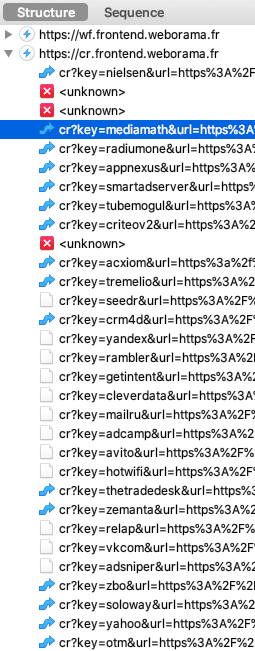
The partners with a small blue arrow in front were activated when the home page loaded (redirection from Weborama to the partner and therefore leak of my personal data), the others will potentially be activated when reading an article, joy!
It's worth noting that some advertising players do respect your choice and place no cookies: the advertising monetization platforms AppNexus and Magnite (formerly Rubicon), and above all Google (which enjoys a privileged position at Lemonde.fr, as its main ad server and advertising monetization platform).
Well hidden, the information that your personal data can still be exploited via a dubious legal basis, "legitimate interest"
What can these advertising companies do with your personal data? Let’s return to the consent banner, and in particular to “Advertising targeting cookies”:

No mistake, you refused them. However, let's click on "See description and personalize":
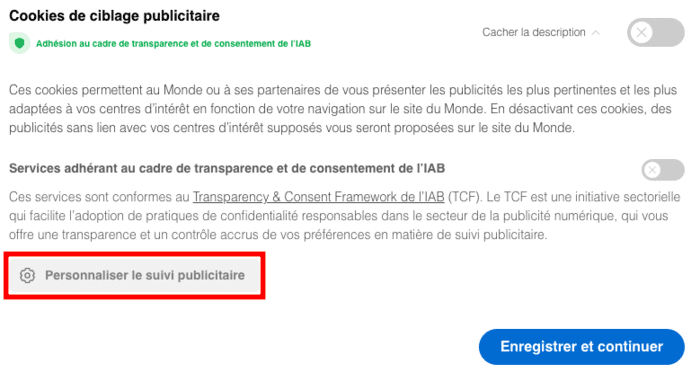
Still no error, Lemonde.fr also informs you that by deactivating these cookies, you will be shown advertisements unrelated to your supposed interests. Now let's click on "Personalize advertising tracking", and surprise! Many purposes are explained and consent is deactivated. But except for the purpose "Store and/or access information stored on a terminal" (the one allowing players to place a cookie with an advertising identifier), the box "Authorize the processing of your data on the basis of a legitimate interest for this purpose" is checked:
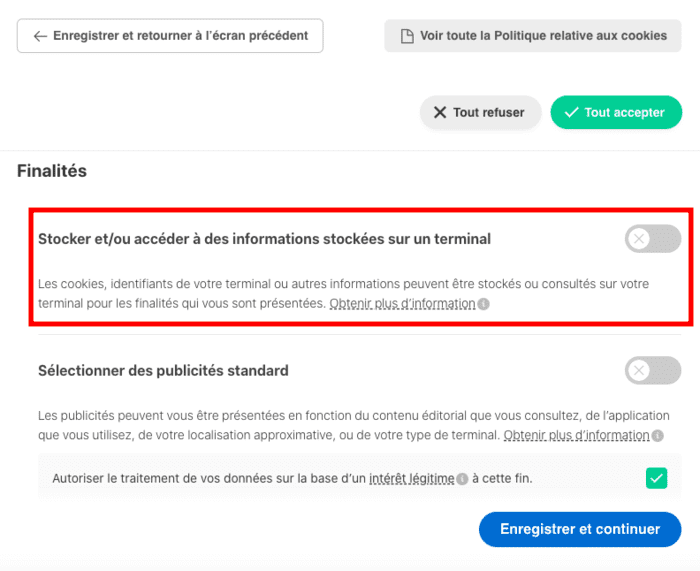 The purpose “Store and/or access information stored on a terminal” requires your consent (no legitimate interest here). The various advertising players violate your choices by placing cookies with advertising identifiers.
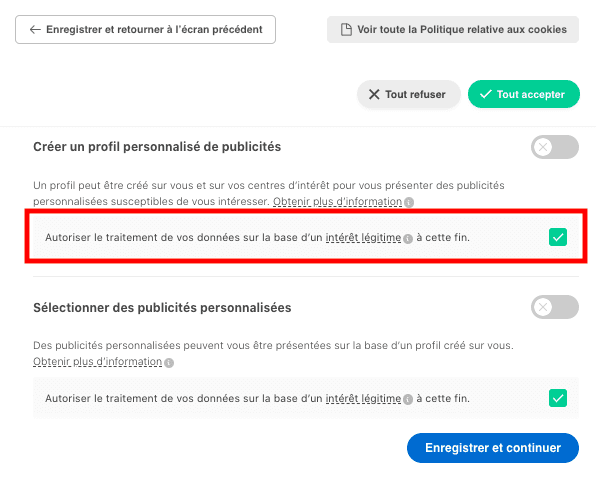 TCF v2 allows different advertising companies to declare legitimate interest as a legal basis for different purposes. But these players often need an advertising identifier to achieve these purposes (for which your consent is always required)... The snake eats its own tail.
Thus the advertising players tracking you claim permission to perform different processing operations, not on the legal basis of consent (reminder: you have already refused), but on the basis of legitimate interest, provided for by the GDPR. It is difficult to justify legitimate interest when it comes to purposes such as:
- Create a personalized advertising profile (= profile yourself).
- Select personalized advertisements (= influence you according to your profile).
Legitimate interest likely does not hold for most of the purposes presented on this consent banner. The CNIL points out, moreover, that legitimate interest can only be invoked if the processing meets the condition of “necessity”, and surveillance and targeted advertising are not “necessities”.
Uncheck legitimate interest for the different purposes, and nothing changes
Let's continue our marathon. To refuse legitimate interest for the different purposes, the "Refuse all" button does not work! Another "dark pattern", just the way we like them. You have to uncheck legitimate interest for each purpose individually, nine clicks in all! Click "Save and continue" and look at the result:
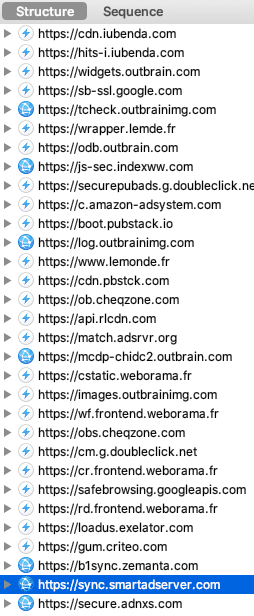
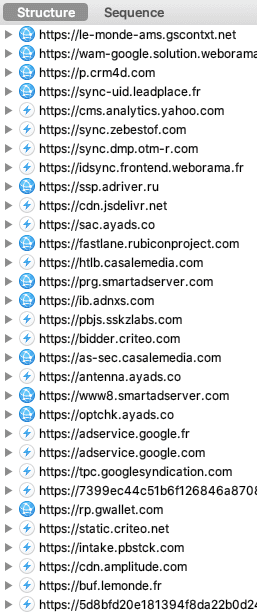
Caramba, nothing changes! Looking at the details, most of these players continue to drop a cookie, as if nothing had happened.
Disable legitimate interest for each company individually?
All hope is not lost, let's go back to our consent banner, reproduce the different refusals and this time, scroll to the bottom of the "Personalize advertising tracking" window (be quick because Lemonde.fr has an auto-refresh which takes you back to the home page and forces you to redo all the steps):
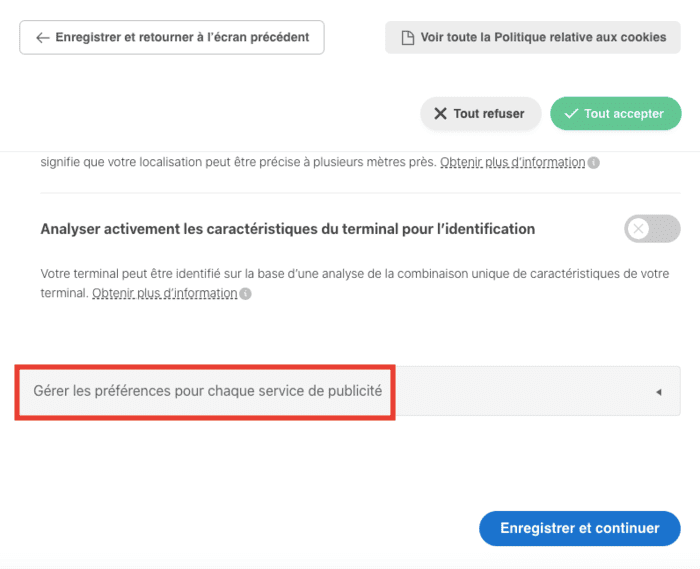
You land on an endless list of partners (more than 500), some of which do rely on legitimate interest for specific purposes. And even though you unchecked all the legitimate-interest purposes in the previous step, these partners still have the legitimate-interest box checked! Take Google, at random:
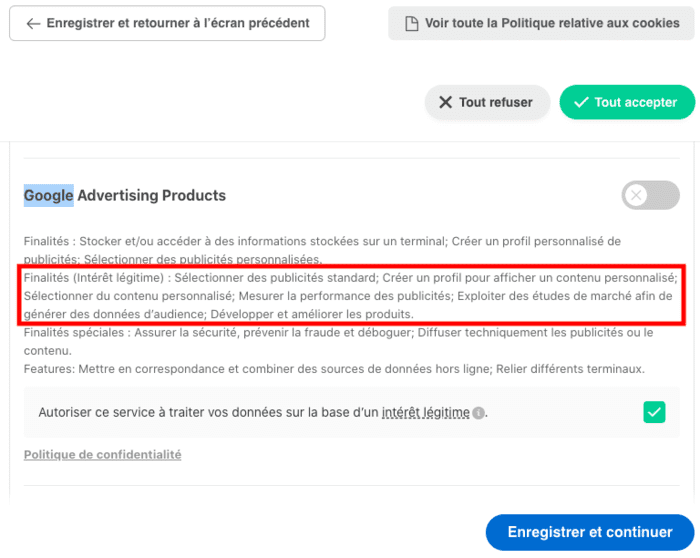
Google relies on consent for the first purpose "Store and/or access information stored on a terminal" (it has no choice, it's the law, and the TCF does not allow anything else). And in fact, Google did not place an advertising identifier on my computer (no Doubleclick cookie IDE). Google, on the other hand, indicates that it relies on legitimate interest for various purposes, which is highly debatable:
Select standard advertisements; Create a profile to view personalized content; Select personalized content; Measure the performance of advertisements; Use market research to generate audience data; Develop and improve products.
Criteo is one of the companies that still tracks you, even after refusing consent. What purposes does it declare, and on what legal basis?
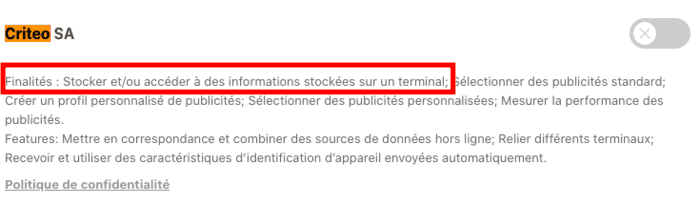
Criteo therefore declares that it relies on consent for the first purpose "Store and/or access information stored on a terminal" (it has no choice, it's the law and the TCF does not allow anything else), and never relies on legitimate interest. Criteo violates the law since it places an advertising identifier on my computer without my consent (via the cookie uid), which is hardly surprising given the company's record on privacy violations.
We also noted that Weborama, the “Trojan horse” leaking your personal data to multiple companies, did not respect your refusal of consent. What purposes does it declare, and on what legal basis?
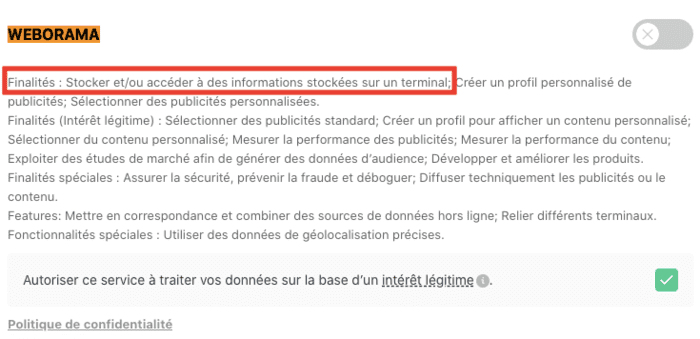
Weborama declares that it relies on consent for the first purpose "Store and/or access information stored on a terminal" (it has no choice, it's the law and the TCF does not allow anything else), but on legitimate interest for many other purposes. Weborama therefore violates the law by placing an advertising identifier on my computer without my consent (via the "AFFICHE_W" cookie), and allows itself to synchronize this advertising identifier with numerous other companies which can thus track me. The legitimate interest it claims for various purposes then allows it to profile me and exploit my browsing.
To what extent do adtech advertising companies abuse this notion of legitimate interest? To explore the issue further, you can read the publication by Célestin Matte, Cristiana Santos and Nataliia Bielova, “Purposes in IAB Europe’s TCF: which legal basis and how are they used by advertisers?". In May 2020, only 325 adtech companies were registered with the TCF, but legitimate interest was widely used:
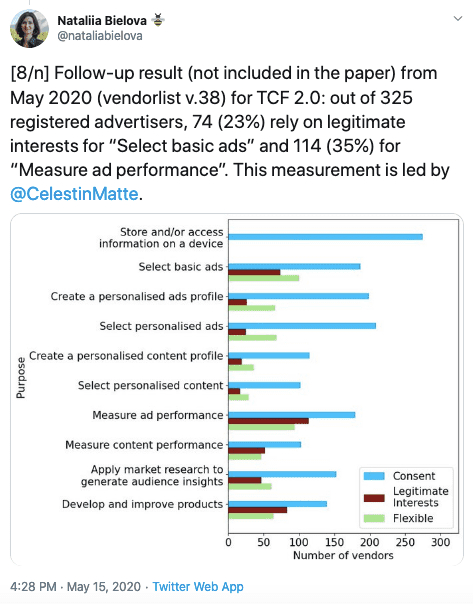
Obviously, I cannot refuse the legitimate interest for all these surveillance companies (more than 500 companies with which Lemonde.fr could theoretically work). Note that you shouldn't have to opt out of legitimate interest for every advertising company:
- Refusing consent in step 1 should allow you to refuse “Ad Targeting Cookies”: normally this is the end of the game for the advertising industry.
- If you continue browsing, the purpose "Store and/or access information stored on a terminal" cannot be based on legitimate interest, so here again, no other options than to rely on your consent to place a cookie with an advertising identifier.
- When you uncheck legitimate interest for different purposes, this applies to all advertising companies. You should not need to uncheck legitimate interest for any company specifically.
However, what happens if I refuse the legitimate interest in Weborama ("opt-out")?
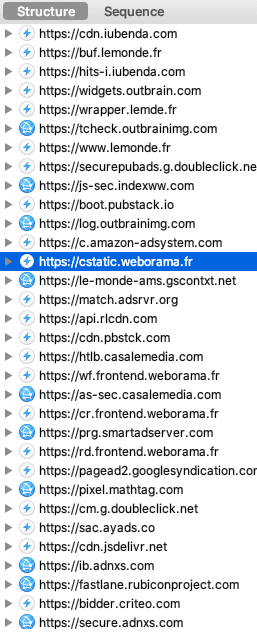
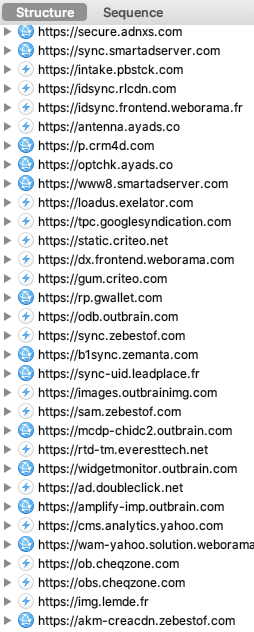
As you can see... it is "business as usual". You are still tracked extensively. In particular, Weborama still identifies you via an advertising identifier and still syncs that identifier across the cosy little world of online advertising surveillance.
Lemonde.fr, its CMP Iubenda and adtech companies, a hellish trio
Let's recap the obstacle course facing a user who does not want to be tracked and who follows the procedure set up by Lemonde.fr and its provider Iubenda (Consent Management Platform):
- When arriving on Lemonde.fr, do not scroll or click on an article because via a loophole introduced by the CNIL in a 2013 deliberation, "continuing to browse constitutes agreement to the placement of Cookies on your terminal". And obviously Lemonde.fr uses this loophole, which is no longer valid.
- Indeed, this deliberation was repealed in July 2019, and the new deliberation indicates: "The strengthening of individuals' rights leads the Commission to repeal its deliberation no. 2013-378 of December 5, 2013 adopting a recommendation relating to cookies and other tracers covered by article 32-II of the law of January 6, 1978 (hereinafter "the cookies and other tracers recommendation") to replace it with these guidelines. These guidelines will be supplemented subsequently by sectoral recommendations aimed in particular at specifying the practical arrangements for obtaining consent.". The legal value of the recommendations does not, however, postpone the application of ePrivacy, the GDPR, or the new deliberation.
- On the scroll in particular, the 2019 deliberation indicates: “The Commission emphasizes that consent must be manifested through a positive action by the person previously informed of the consequences of their choice and having the means to exercise it. Continuing to browse a website, using a mobile application or scrolling down the page of a website or mobile application do not constitute clear positive actions amounting to valid consent".
- Despite these precautions, you are already being tracked by AT Internet, Lemonde.fr is already violating the law.
Let's continue our test of the consent banner:
- So click on "Configure cookies", because there is no first-level choice to refuse cookies (unlike the "Accept" button at the first level).
- Realize that Lemonde.fr is once again violating the law by not allowing opt-out.
- The "Advertising targeting cookies" are unchecked, but most advertising companies continue to track you (notable exception: Google). Click on "See description and customize" at the bottom of the window to understand whether we can avoid this surveillance.
- Read that advertising services adhere to the IAB Transparency and Consent Framework, and that it is unchecked, but still click on "Personalize advertising tracking".
- Notice on the next page that these advertising services use your personal data for various purposes (10 purposes and 2 special purposes over which you have no control), and that while consent is unchecked for these purposes, legitimate interest is checked for almost all purposes except one ("Store and/or access information stored on a terminal" requires your consent). Since there is no button to uncheck legitimate interest for these different purposes all at once, uncheck them one by one (9 clicks). Realize that this has no effect on the advertising companies, which continue to track you.
- At the very bottom of this long window, click on "Manage preferences for each advertising service" and realize that there are more than 500 partners who can theoretically track you (Lemonde.fr could also trim the list considerably; many players are too small or absent from the French market). Also realize that even though you unchecked legitimate interest for the different purposes in the previous step, the legitimate interest box is still checked for a good number of these companies, for various purposes.
- Having no option to uncheck legitimate interest for all companies at once, uncheck Weborama, a “Trojan horse” of advertising tracking, and realize that it has no effect. Weborama continues to track you and allow many other companies to track you.
A nightmare journey, then, thanks to Lemonde.fr, its CMP Iubenda and advertising companies that do not care about your choices or your privacy. A final point on Iubenda, the provider that enables Lemonde.fr to present you with this consent banner and its painful process. Its job is to collect your choices and pass them on to the various advertising companies, so let's check that the signal it collects and then transmits to them is correct.
This is the signal transmitted when you simply ignore the advertising banner by scrolling on the Lemonde.fr home page (which constitutes consent thanks to the CNIL). How did I retrieve it? Via Charles or the Chrome console, retrieve the "gdpr_consent" field from a request sent to an advertising player and decode the string via this site (TCF v2):
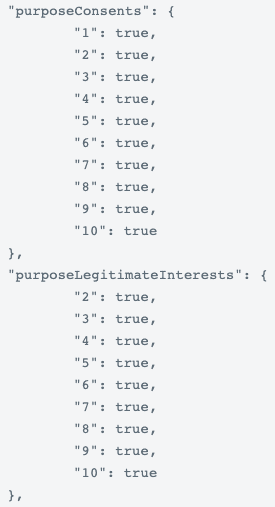
I simply scrolled, but obviously it is a "free, specific, informed and unequivocal consent". Now let's look at the signal sent when you have refused consent and legitimate interest for each proposed purpose:
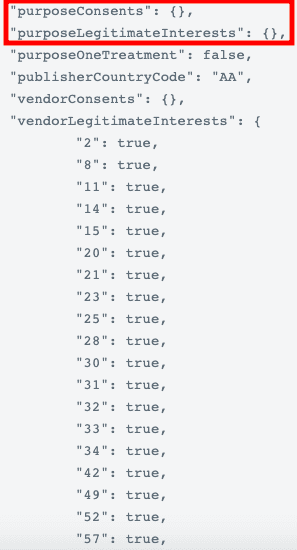
Iubenda does not provide the value of the variables representing the different purposes of consent and legitimate interest. It turns out that if we read the TCF v2 specification, it is correct:
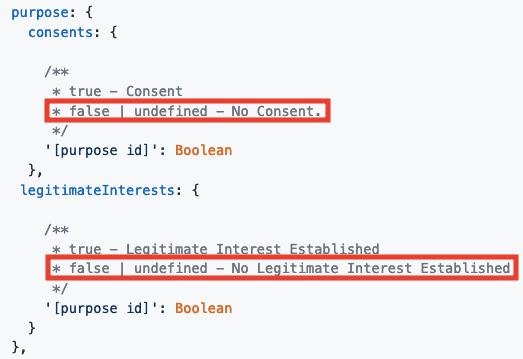
If the variables purposeConsents and purposeLegitimateInterests are not defined, this must be interpreted as “No consent” (therefore no cookies with advertising identifiers) and “Legitimate interest not established”.
Good news: no Google tracking... and no ads delivered by Google
If Lemonde.fr, its CMP and the small world of advertising tracking manage to violate your choices and continue to track you, we can nevertheless note that when you take the trouble to click on "Personalize" on the consent banner, then click on "Save and continue", Google no longer places cookies, and the number of advertisements drops sharply, giving you a slightly better reading experience.
Why? The first version of TCF (Transparency & Consent Framework), the protocol set up by the IAB (the advertising industry) to collect and propagate consent signals throughout the advertising chain, was not supported by Google.
Since August 15, Google supports TCF v2. For customers of its Google Ad Manager monetization platform (such as Lemonde.fr), Google is required to respect user choices. Here is how it communicates about the first purpose, "To store and/or access information on a device":
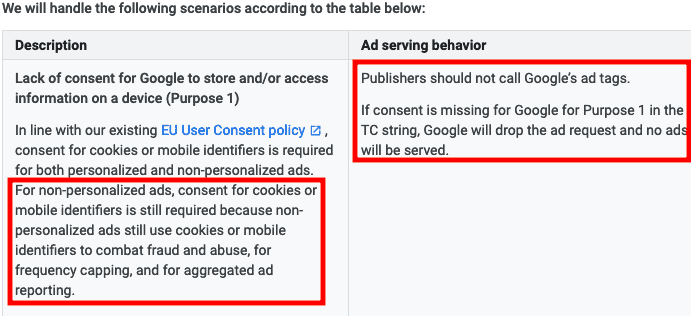
Several interesting information here:
Google is not capable of delivering advertising without tracking you (a.k.a. without placing the Doubleclick cookie IDE). What reasons does it give? Google says it needs this to detect fraud and abuse, limit the number of exposures to the same ad ("frequency capping") and provide aggregated reports.
Google says it needs your consent to store cookies or mobile identifiers, even for non-targeted ads. If we read its "User consent rules in the European Union", but also Help with user consent rules in the European Union", Google indicates that this obligation comes from the "cookie provisions of the EU Electronic Privacy Directive" (also called the ePrivacy directive):
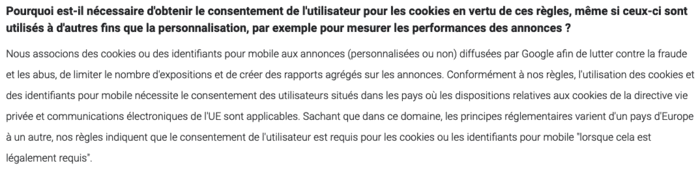
Google needs user identifiers to measure the performance of advertisements, therefore your consent:

Without consent for the first purpose, publishers must not call Google (Lemonde.fr does not take this into account and calls Google). If Google is called, it will not deliver advertising (and indeed, no advertising served through Google).
Legal explanations on the need for consent for storing cookies
Careful, this is technical. Thanks to @Cellular_PP for his detailed explanations. Let's start from Directive 2002/58/EC, Article 5 paragraph 3 (I have put the interesting passage in bold):
Member States shall ensure that the use of electronic communications networks with a view to storing information or accessing information stored in the terminal equipment of a subscriber or user is permitted only on condition that the subscriber or user is provided, in compliance with Directive 95/46/EC, withclear and complete information, among other things on the purposes of the processing, and that the subscriber or user has the right to refuse such treatment by the data controller. This provision does not prevent technical storage or access aimed exclusively at effecting or facilitating the transmission of a communication via an electronic communications network, or strictly necessary for the provision of an information society service expressly requested by the subscriber or user.
Directive 2009/136/EC, applicable since 2012, modifies article 5 paragraph 3 (in bold, observe the introduction of consent):
Member States shall ensure that the storage of information, or obtaining access to information already stored, in the terminal equipment of a subscriber or user is permitted only on condition that the subscriber or user gave his consent, after having received, in compliance with Directive 95/46/EC, clear and complete information, among other things on the purposes of the processing. This provision does not prevent technical storage or access aimed exclusively at carrying out the transmission of a communication via an electronic communications network, or strictly necessary for the supplier for the provision of an information society service expressly requested by the subscriber or user.
The French transposition is in Article 82 of the French Data Protection Act.
The notion of consent is mentioned in Article 2 of the same directive 2002/58/EC:
the "consent" of a user or subscriber corresponds to the "consent of the data subject" contained in Directive 95/46/EC
Here is the famous definition of consent, in Article 2 of Directive 95/46/EC
“consent of the data subject”: any free, specific and informed expression of will by which the data subject accepts that personal data concerning him or her may be processed.
What is the link between these “ePrivacy” directives and the GDPR on this obligation of consent? Article 95 of the GDPR indicates not to impose additional obligations:
This Regulation does not impose additional obligations on natural or legal persons with regard to processing in the context of the provision of publicly available electronic communications services on public communications networks in the Union in relation to those aspects for which they are subject to specific obligations having the same objective set out in Directive 2002/58/EC.
An opinion by the @EU_EDPB clarifies the relationship between the two texts.
Point 28 of the opinion states that Article 5 paragraph 3 applies to cookies:
The overarching aim of the ePrivacy Directive is to ensure the protection of fundamental rights and freedoms of the public when they make use of electronic communication networks. In light of this aim, articles 5(3) and 13 of the ePrivacy Directive apply to providers of electronic communication services as well as website operators (e.g. for cookies) or other businesses (e.g. for direct marketing).
Point 40 of the opinion indicates that when Article 5 paragraph 3 mentions that consent is required, it is not possible to use other bases:
A similar situation occurs with regards article 5(3) of the ePrivacy Directive, insofar as the information stored in the end-user’s device constitutes personal data. Article 5(3) of the ePrivacy Directive provides that, as a rule, prior consent is required for the storing of information, or the gaining of access to information already stored, in the terminal equipment of a subscriber or user. To the extent that the adopted information stored in the end-users device constitutes personal data, article 5(3) of the ePrivacy Directive shall take precedence over article 6 of the GDPR with regards to the activity of storing or gaining access to this information. The outcome is similar in the interplay between article 6 of the GDPR and articles 9 and 13 of the ePrivacy Directive. Where these articles require consent for the specific actions they describe, the controller cannot rely on the full range of possible lawful grounds provided by article 6 of the GDPR.
Conclusion: it is indeed illegal to invoke legitimate interest in order to place a cookie with an advertising identifier.
Respecting your privacy, the great fear of adtech
Reading the press, we can follow the thinking of the ad sales houses:
- Google no longer delivers advertising via Google Ad Manager if the Internet user does not give their consent. The majority of French news sites use Google Ad Manager as an advertising distribution and monetization tool.
- The current consent banners disgust the vast majority of Internet users, but the CNIL must issue new recommendations, to finally respect the spirit of the GDPR.
Potential consequence if the CNIL one day does its job: a real consent mechanism (for example placing the "Accept" and "Refuse" buttons at the same level, or better, offering a simple choice at browser level) with real sanctions in the event of violation of the law. Here is a reaction representative of the adtech sector:
Since the Internet user's refusal has no impact on their browsing experience, it is dramatic to put this option on the same footing as acceptance, protests an adtech boss
Obviously, refusing consent would have a huge impact on the browsing experience: you would no longer be tracked (bonus, no more intrusive advertising) and page loading times would be greatly reduced.
The ad sales houses, for their part, would do well to ask themselves the right questions: are a sharply degraded user experience and blanket surveillance really the answer to their economic problems? Not really, judging by the poor financial health of news sites saturated with intrusive advertising. On that note, you can read these two excellent articles:
- On Wired, "Can Killing Cookies Save Journalism?": The experience of Dutch public radio (equivalent to France Info), which now earns more money through untargeted advertising than before.
- On Forbes, "Marketers And Publishers Are Making More Money By Using Less Adtech": explanations of how adtech intermediaries monopolize the majority of the money spent by advertisers, preventing publishers from making a decent living.
What should you do on your side? As always, do not rely on websites to respect your choices: equip yourself with an ad blocker such as uBlock Origin.
On its iOS app, Le Monde tracks you from the first launch
On smartphone, you do not have to go through the Lemonde.fr website; you can also use the app. Is it more respectful of your privacy? To test the Le Monde iOS app, I followed this procedure on my iPhone:
- Closing the various background applications.
- Installation of the Le Monde application.
- Launch of the Charles Proxy application and enabling tracking.
- Launch of the Le Monde application.

As on its website, Le Monde clearly displays its consent banner, without offering a first-level option to refuse trackers. Let's look at the trackers sent via the log export from my Charles Proxy session to my computer:
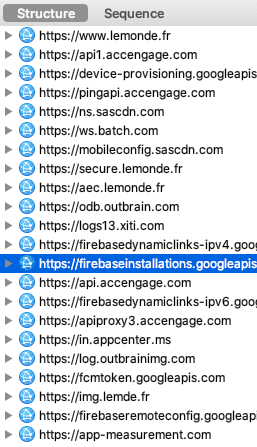
Even before setting up the consent banner, Le Monde has already leaked your personal data to several companies:
- Accengage: French push notifications tool, acquired in 2018 by mobile marketing company Airship.
- Google: Le Monde uses Firebase, the app developers' toolkit.
- AT Internet: the French analytics company also tracks you on the Le Monde app.
- Batch: mobile CRM and push notifications solution.
- Outbrain: the trashy clickbait articles, in the app too.
- Microsoft: via appcenter.ms, Le Monde uses Visual Studio App Center to manage continuous integration and delivery for its app.
Refuse tracking, tracking continues
Return to the consent banner and click on “Configure cookies”:
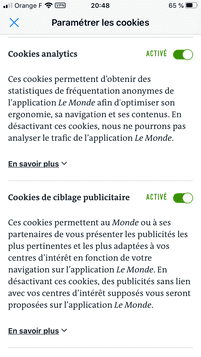
First (bad) surprise: all the purposes are pre-checked, which is not really in the spirit of the GDPR. Let's look at the details of "Operational Cookies":
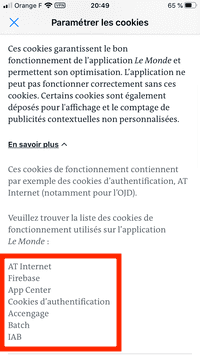
So once again, Le Monde considers (wrongly) that AT Internet trackers can be classified as operational cookies, without offering you an opt-out. The classification of Accengage, Batch and Google as operational cookies is also questionable. Now uncheck the different purposes, read 3 articles and observe the trackers:
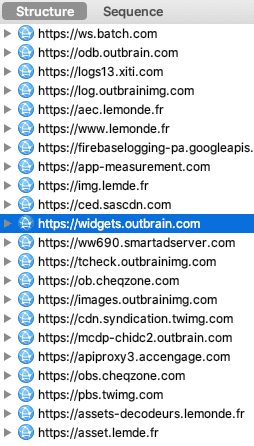
Surveillance therefore continues, with the same companies but also an additional guest: Smart AdServer, a French ad server used by Le Monde for its app.
How to protect yourself? While waiting for possible sanctions from the CNIL, you can use apps such as DNSCloak, Adguard or NextDNS on iOS.